Industrial training is undergoing a significant transformation as the transition to Industry 5.0 places greater emphasis on human-centric approaches and collaboration between humans and intelligent machines. Technologies such as Extended Reality (XR) and Artificial Intelligence (AI) are playing a key role in enabling more immersive, adaptive and personalized learning experiences [1]. As highlighted in recent research, the combination of XR and AI allows the development of training environments that adapt dynamically to the needs and performance of individual users [2].
The XR5.0 Training Platform focus on the integration of AI-driven tools that enhance both the creation and delivery of XR-based training. These developments represent a shift from static and predefined training experiences to intelligent systems capable of supporting users in real time and improving learning outcomes [3].
From Immersive Training to Intelligent Training Systems
The XR technologies have already demonstrated their value in visualizing complex systems and enabling interactive learning, but traditional XR-based training solutions often rely on predefined content and fixed workflows. This approach can limit scalability, particularly in industrial environments where tasks, user profiles, and learning needs vary significantly. The XR5.0 Training Platform addresses these limitations by incorporating AI capabilities that transform XR training into a more dynamic and responsive process. This allows for intelligent interaction, contextual guidance and adaptive learning pathways, supporting human capabilities and aligns with the Industry 5.0 vision.
AI-Enhanced Content Creation and Management
A key advancement in the XR5.0 Training Platform is the introduction of AI-supported tools within the Training Programs Authoring Tool (TPAT). These tools assist training managers in transforming traditional training materials, such as PDF manuals into structured XR-native content.
Using AI-based text extraction and processing mechanisms, procedural information embedded in documents can be automatically converted into structured elements such as checklists and workflows which significantly reduces the time and effort required to create XR training programs.
Intelligent Assistance in Immersive Environments
Another important feature is the integration of an AI-based assistant within the XR Training Plugin (XRTP). This assistant provides real-time, context-aware support to users during immersive training sessions.
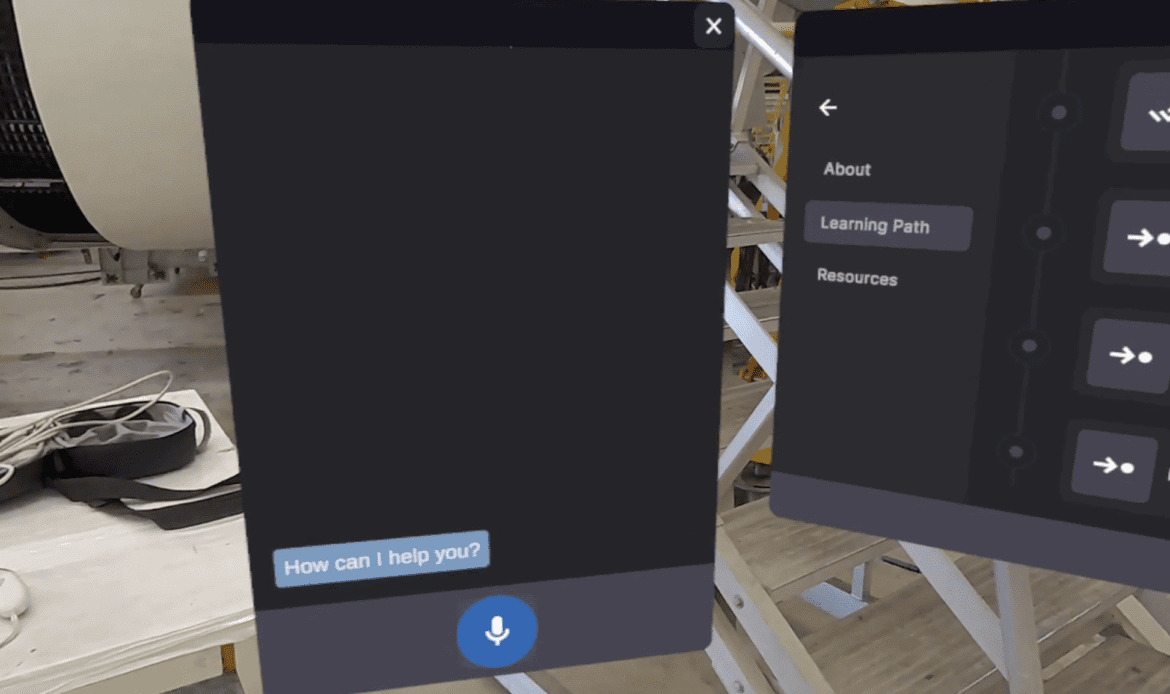
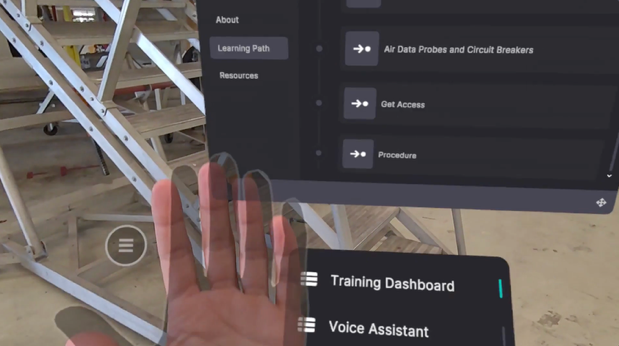
Operators can interact with the assistant through natural language, receiving explanations, guidance and clarifications related to specific steps in a procedure. This reduces reliance on external documentation and allows users to remain fully engaged within the XR environment. The left image shows the panel used to trigger the voice assistant in the context of the TAP pilot, while the right image shows the voice assistant interface.
Adaptive and Personalized Training Experiences
Beyond content creation and real-time assistance, the XR5.0 Training Platform introduces mechanisms for personalization and adaptation of training experiences. These mechanisms operate at two levels.
1) Static personalization allows training programs to be tailored based on user profiles, such as experience level, ensuring that content is aligned with the needs of each operator.
2) Dynamic adaptation, on the other hand, is driven by user interaction during training sessions. Metrics such as task completion time can be used to adjust the training experience in real time.
For example, when a user encounters difficulties in a specific step, the system can recommend additional supporting materials, such as a 3D model visualization or an instructional video. This adaptive approach contributes to more effective learning by providing targeted support exactly when it is needed.
Integration within a Scalable XR Infrastructure
These AI-driven capabilities are supported by the underlying architecture of the XR5.0 Training Platform, which combines cloud-based XR streaming, centralized asset management and modular training program design. The core components of this platform, namely the Hololight Hub, XR Training Asset Repository and XR Training Management System, work together to enable a device-agnostic delivery of XR training experiences.
Future Directions
Future work will primarily focus on the deployment and validation of the XR5.0 Training Platform across the industrial pilots, where the platform has already reached a level of maturity that enables end-to-end testing in real operational contexts. The pilot deployment will provide critical insights into performance, usability, and scalability, as well as the effectiveness of immersive training workflows in supporting complex industrial tasks.
In addition, a key focus of ongoing development is the finalization and integration of the adaptive training mechanisms. These advancements will complete the development of the full integrated version of the XR5.0 Training Platform, an intelligent and responsive training system aligned with the human-centric principles of Industry 5.0.
References
[1] Moser, T., Schlager, A.: Training and Assistance in Industrial Environments Using Extended Reality IEEE Conference on Virtual Reality and 3D User Interfaces Abstracts and Workshops (VRW) pp. 97-103 (2024).
[2] Kiourtis, A. et al.: XR5.0: Human-Centric AI-Enabled Extended Reality Applications for Industry 5.0. 36th Conference of Open Innovations Association (FRUCT), Lappeenranta, Finland, 2024, pp. 314-323 (2024).
[3] Oliveira, J., Saraiva, T., Shah, H. M., Mavrogiorgis, E., Mavrogiorgou, A., & Kiourtis, A. (2025). XR training in Industry 5.0: Advancing human-machine collaboration with the XR5.0 training platform. In Proceedings of the International Conference on Extended Reality (pp. 93–100).