EKSO S.r.l. | XR5.0 – Pilot 3
The invisible challenge beneath our feet
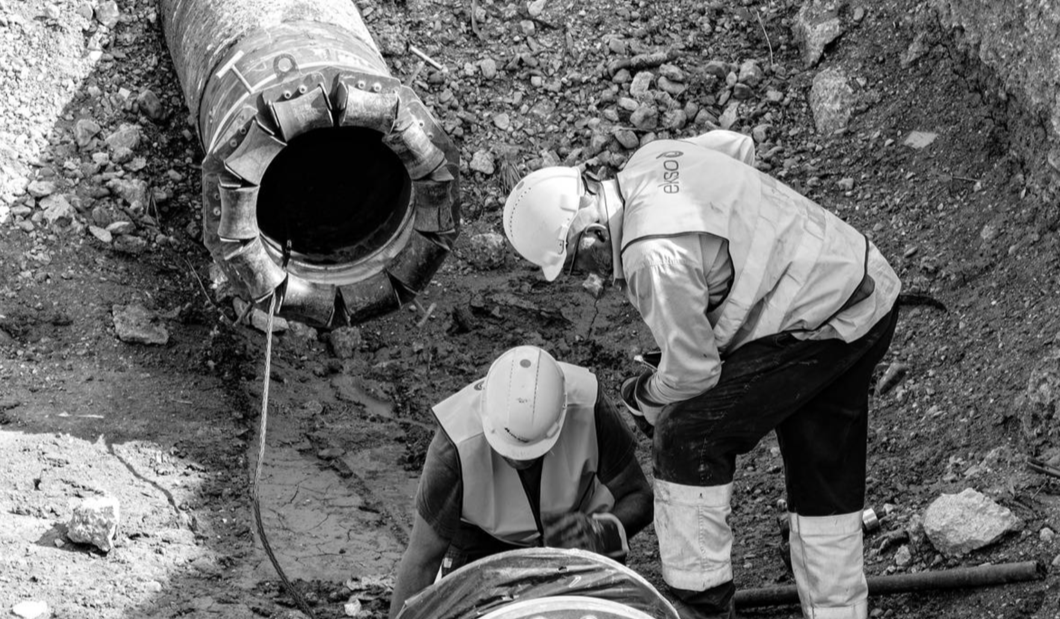
Every day, essential services depend on infrastructure that most people never see. Underground water pipelines transport vital resources across cities, industrial facilities and communities. Yet inspecting, maintaining and rehabilitating these networks remains a complex task.
For field operators, one of the greatest challenges is making informed decisions about infrastructure that is physically inaccessible. Traditional inspection methods provide valuable information, but this information is often distributed across technical reports, video recordings, sensor readings and the experience of skilled professionals.
What if these different sources of knowledge could become accessible exactly where and when operators need them?
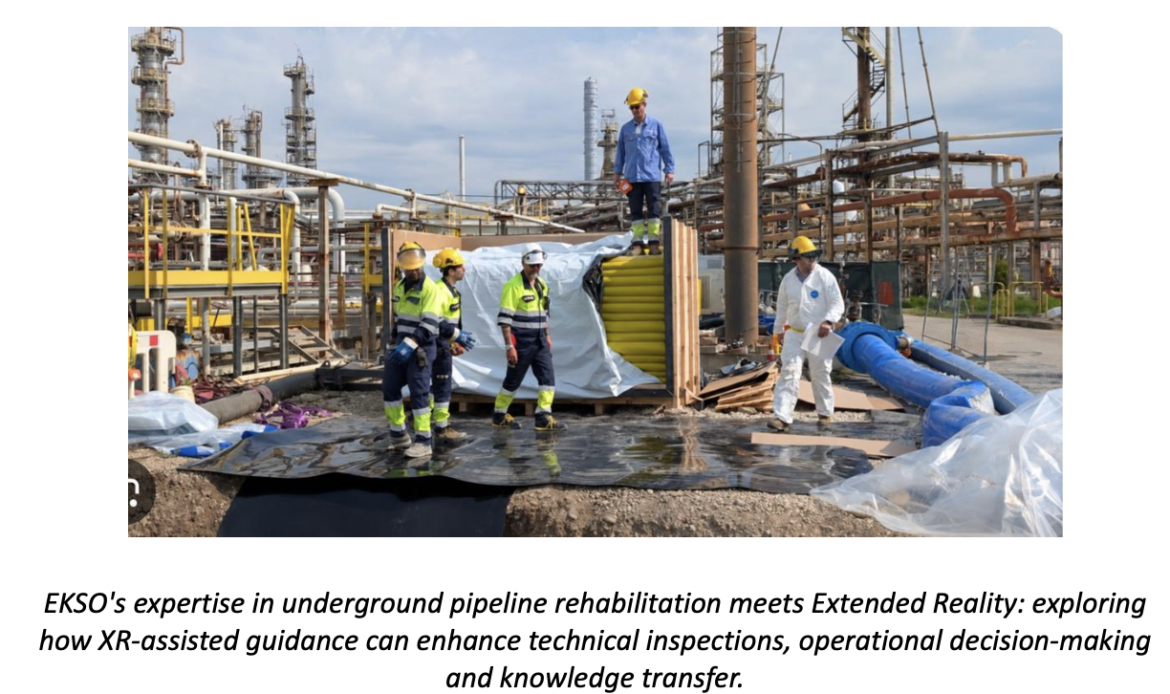
This is one of the challenges addressed by the European XR5.0 project, where EKSO contributes its industrial experience in trenchless pipeline rehabilitation to the development and validation of human-centric Extended Reality applications.

Technology that supports people, not replaces them
Industry 5.0 introduces a fundamental change of perspective: technological innovation should not simply automate industrial processes, but strengthen human capabilities, improve working conditions and support more sustainable operations.
For EKSO, this vision is particularly relevant. Pipeline maintenance requires specialised expertise, operational judgement and an understanding of environmental and safety constraints. Digital technologies can support these capabilities, but they cannot replace the practical knowledge accumulated by experienced technicians.
Extended Reality (XR), combined with Artificial Intelligence (AI), offers the possibility of bringing information and guidance directly into the operator’s working environment.
Instead of consulting separate screens or documentation, a technician could access contextual information through an augmented reality interface, interpret inspection findings and receive support while performing complex procedures.
The objective is not to remove human decision-making, but to make it better informed.
From industrial challenges to real-world applications
Within XR5.0, EKSO participates in Pilot 3, Operator 5.0 Training for Smart Water Pipes based on XR Streaming.
The pilot explores three complementary application scenarios.
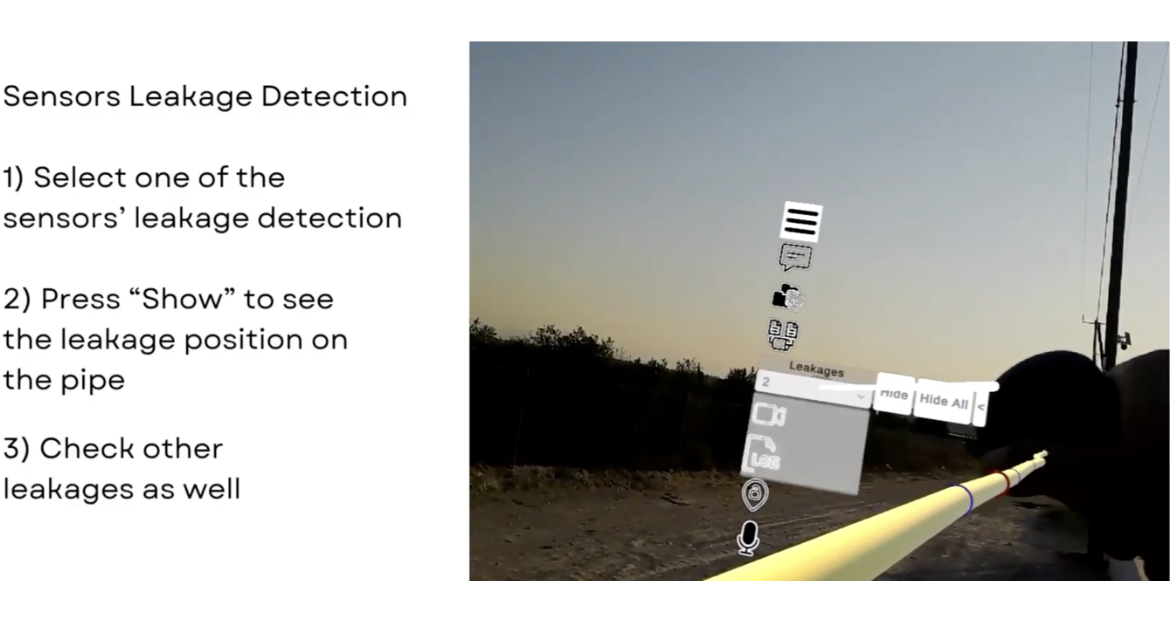
The first concerns the identification and localisation of faults or leaks within underground pipeline networks. By combining sensor information, AI-based analysis and augmented reality, the approach aims to help operators understand where potential problems are located without relying exclusively on invasive investigations.
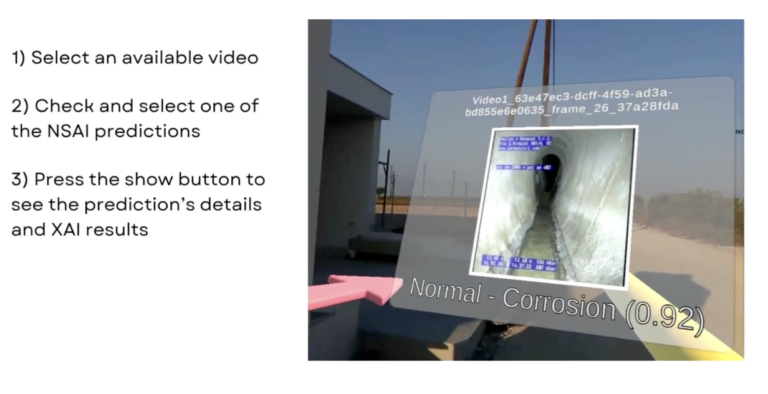
The second focuses on pipeline video inspections. These produce valuable visual evidence of internal conditions, but interpreting the recordings can be demanding. Integrating video analysis with XR could make relevant anomalies more accessible and understandable directly in the field.
The third application explores wearable technologies and immersive assistance to support operators during technical and safety procedures.
Together, these scenarios illustrate how XR can move beyond visualisation and become a practical interface between industrial information and human expertise.
A new perspective on training and knowledge transfer
One particularly promising dimension of this transformation is workforce development.
In specialised industrial sectors, operational knowledge is frequently acquired through years of practical experience. Transferring that expertise to new generations of technicians is essential for maintaining high standards of quality and safety.
Immersive training environments offer an opportunity to complement conventional training methods. Workers could familiarise themselves with technical procedures, explore simulated situations and practise decision-making before encountering complex scenarios in the field.
When combined with AI-supported guidance, these experiences could also become more responsive to individual skills, experience and learning needs.
For EKSO, this human-centric approach connects technological innovation with an equally important objective: preserving specialised industrial knowledge while making it more accessible to future professionals.
Smarter infrastructure, more sustainable interventions
The relevance of these developments extends beyond individual operators. Water infrastructure management faces growing demands for efficiency, reliability and sustainability. Unnecessary excavation, repeated inspections and poorly targeted interventions can increase operational costs, environmental impacts and disruption to surrounding communities.
EKSO’s experience in no-dig rehabilitation provides a practical industrial perspective on these challenges.
By helping technicians interpret available information and better understand infrastructure conditions, XR and AI have the potential to support more targeted maintenance strategies.
However, achieving these benefits requires more than technological sophistication. Solutions must be usable in real working conditions, compatible with operational processes and validated through practical experience.
This is why the contribution of industrial partners is essential: they connect technological development with the realities of everyday infrastructure management.
Looking ahead: putting the operator at the centre
As XR5.0 progresses towards the completion of its pilot activities, the experience gained through industrial testing is important for understanding how immersive technologies can create value beyond research environments.
For EKSO, participation in XR5.0 represented an opportunity to explore how emerging technologies can complement its expertise in pipeline rehabilitation while supporting the development of new skills and operational practices.
The broader ambition — extending beyond EKSO — is to shape an industrial future where digital intelligence and human experience are not separate, but seamlessly integrated.
In fact, innovation is not defined by what technology can do, but by what it enables people to achieve in their work and life.
About XR5.0
XR5.0 (Grant Agreement No. 101135209) is a Horizon Europe project developing human-centric, AI-enabled Extended Reality applications for Industry 5.0. The project is funded by the European Union and coordinated by GFT Italia.
Learn more: https://xr50.eu/