
Extended reality (XR) is quickly evolving from just entertainment to becoming powerful operational tools.
Innovative hardware advancements, advanced software applications, and reduced costs have hastened this transformation, even for tasks carried out in challenging conditions and industrial environments.
XR, short for extended reality, encompasses all technologies that transform how we perceive and interact with the world around us, including AI technologies that foster the interplay between humans and AI such as explainable AI (XAI), Active Learning (AL), Generative AI (GenAI), and neuro symbolic learning.
XR significantly impacts industrial environments, particularly in Industry 5.0, by enhancing efficiency, safety, and training.
Various advancements are bringing industries closer to the virtual world, particularly in the realms of work and manufacturing. For instance, at Northumbrian Water in the UK, remote experts use AR headsets to guide field technicians. Bank of America employs VR for employee training. Additionally, the team responsible for restoring Notre Dame in Paris collaborates on a VR version of the fire-damaged cathedral, allowing them to work in a digital twin of the structure and, last but not least, XR technologies are finding applications in no-dig pipeline renovation and underground infrastructure work with trenchless technology, which are EKSO‘s core businesses.
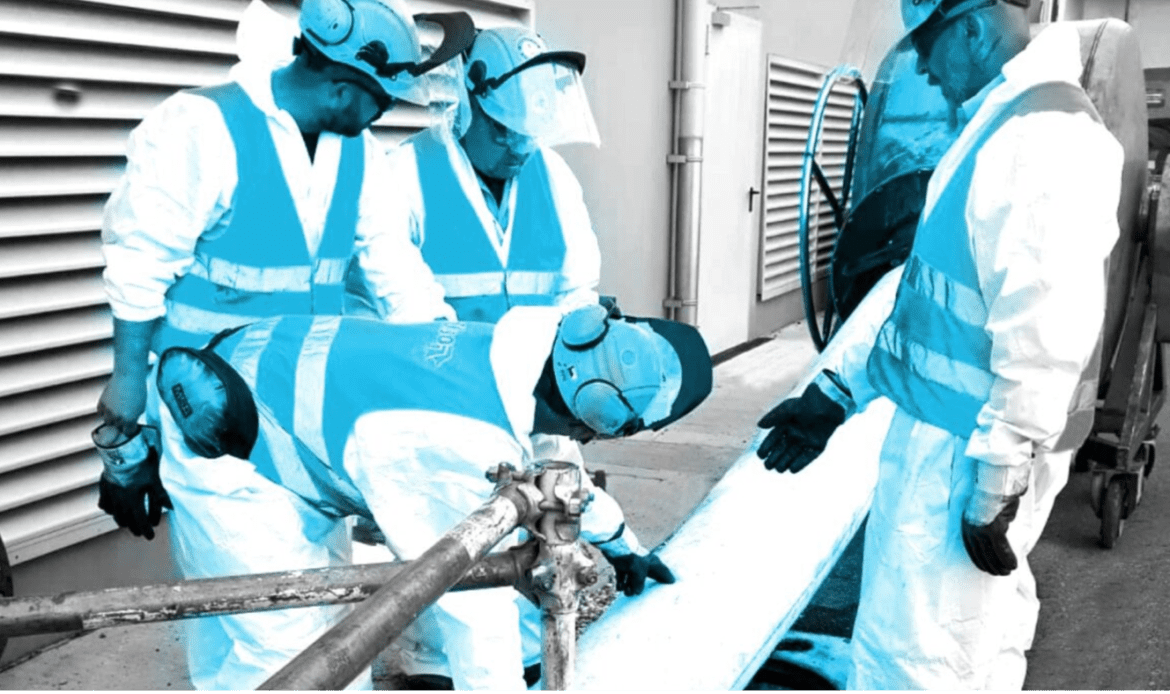
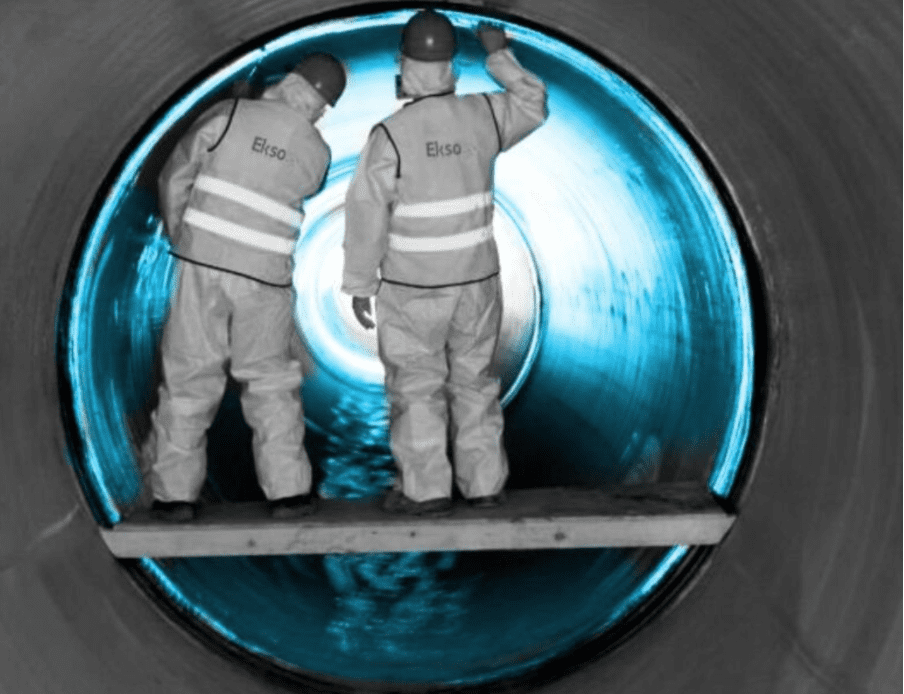
EKSO Srl is a partner and a demonstrator in XR 5.0. The company specializes in no-dig pipeline renovation methods designed to rehabilitate or repair underground pipes without the need for disruptive excavations. This means that EKSO already uses XR technologies to enhance efficiency, accuracy, and safety in this field. Furthermore, the project has a concrete impact, and the technologies involved, such as Augmented Reality (AR) and XR, revolutionize pipeline maintenance and repair processes. AR can overlay 3D models of underground pipelines onto the real-world view, aiding workers in understanding layouts and identifying areas for renovation. It also allows for real-time guidance during repairs and remote support from experts. On the other hand, XR enhances inspection by combining the physical and digital worlds, providing inspectors with real-time data and historical records for accurate assessments. Additionally, XR technologies enable the creation of digital twins for remote monitoring, predictive maintenance, and simulations of potential issues. XR tools also aid in 3D mapping and surveying of underground environments, facilitating accurate renovation planning and evaluation of different no-dig techniques.
EKSO is now moving towards offering personalized training and operations to its workers, such as maintenance technicians.
XR technologies and Virtual Reality (VR) are increasingly being utilized for Training and Simulation purposes, particularly in trenchless technology methods. This innovative approach involves simulating various scenarios in a virtual environment to provide workers with practical training and hands-on experience without the associated risks of working in real-world situations. By immersing workers in a risk-free virtual environment, XR allows them to practice complex procedures and gain valuable experience without the need to disrupt actual infrastructure. This not only enhances their skills but also reduces the potential for errors and accidents when working on real projects, integrating XR into I5.0 applications, with a focus on creating cutting-edge “XR-made-in-Europe” technology that harmonizes with human-centric manufacturing technologies and upholds European values.
Moreover, XR is being utilized to simulate hazardous situations that workers in the no-dig pipeline industry may encounter. For example, VR simulations can replicate dangerous scenarios like ground collapse or accidental damage to existing utilities. By exposing workers to these virtual hazards, they can learn how to react appropriately and develop the necessary skills to avoid accidents in real-world scenarios. This proactive approach to training can significantly improve safety protocols and preparedness among workers, ultimately leading to a safer work environment for all involved.
In this regard, the activities in XR5.0 offer a more efficient way to train maintenance operators and support repair and servicing processes for smart pipes.
By integrating XR technologies into work environments, companies can drastically reduce accidents, improve emergency preparedness, and ensure workers stay safer, healthier, and more productive.
XR5.0 is not the only project within European-financed research that focuses on structuring principles and blueprints for using XR in I5.0 applications. Another initiative called Spirit – Scalable Platform for Innovations on Real-time Immersive Telepresence has a similar focus. SPIRIT’s mission is to create Europe’s first multisite and interconnected framework capable of supporting a wide range of application features in collaborative telepresence. Additionally, 6G-XR – 6G Experimental Research aims to strengthen European leadership in 6G technologies by enabling next-generation XR services and infrastructures that will provide capabilities beyond the current state-of-the-art towards the 6G era.
We believe that AI technologies will drive business innovation. Although it’s still early days, the demonstrations in XR5.0 show that enterprises see AI and Extended Reality as the next step in their digitalization efforts and expect it to have a transformative impact on the way they do business. Conducted with individuals knowledgeable about AI across six demonstrations, XR5.0 presents a consistent global picture – that beyond the hype, enterprise and industrial metaverse use cases are being practically planned and deployed.
See relevant links:
https://digital-strategy.ec.europa.eu/en/policies/extended-reality